偷天换日
Exclusive: Naoero president, Chinese ambassador cycle island together passing China-supported projects, Chinese-run retail stores_我的网站

A | 一个随手丢掉的矿泉水瓶子,背后可能正养活着一家上市公司。 这不是段子,而是当下中国正在发生的商业现实。过去人们眼里上不了台面的“破烂”,正悄然撕开一条超级黄金赛道。
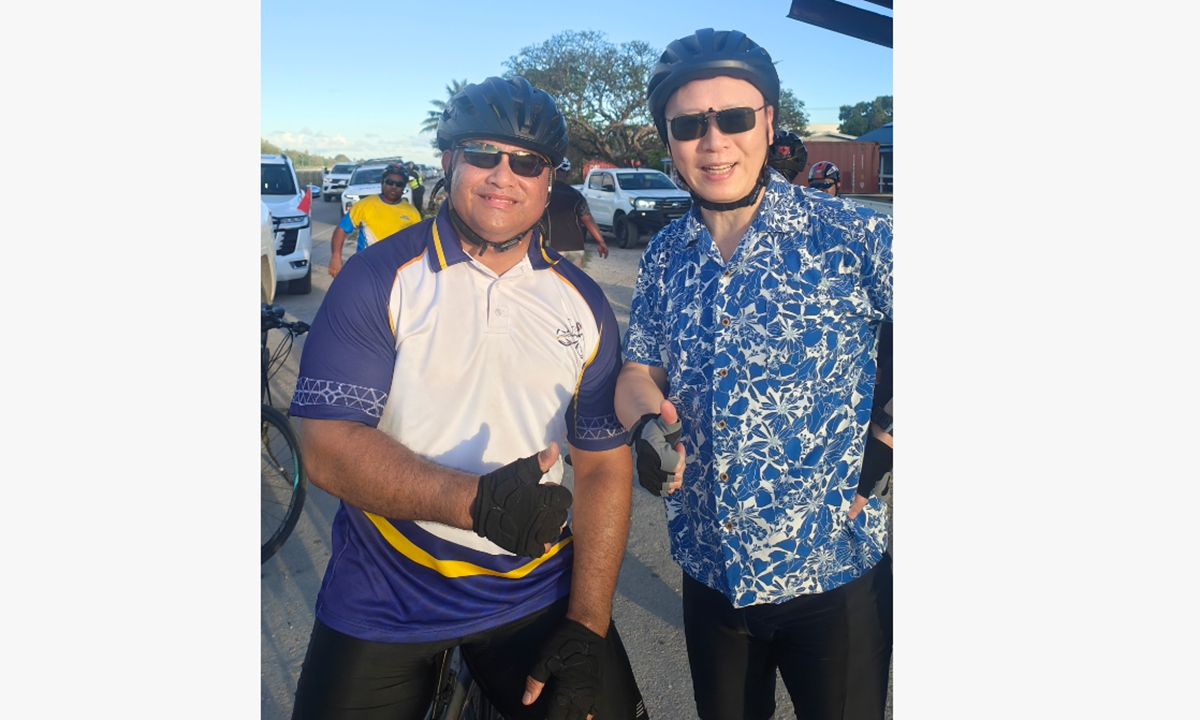
The event offers an unusual glimpse into the close ties between China and the Pacific island country, the Chinese Embassy in Naoero told the Global Times in an exclusive interview, providing further details about the event and the broader cooperation between the two countries.
According to the embassy, Naoero's government has organized various public fitness activities in preparation for hosting the 2028 Micronesian Games, with the aim of improving public health. Whenever his schedule permits, Lü leads embassy diplomats in government-organized cycling events and fitness walks.
The embassy said the cycling route passed several China-supported projects, reflecting the expansion of practical cooperation since China and Naoero resumed diplomatic relations more than two years ago.
Solar-powered streetlights built with assistance from Jiangmen, South China's Guangdong Province, stand along both sides of the road. At Aiwo Port, where a terminal was constructed by China Harbour Engineering Co, a cargo ship provided by China to Naoero was unloading supplies critical to the island.
The Naoero Medical Centre has hosted free clinics provided by ophthalmologists from Sun Yat-sen University, doctors from Xi'an Hospital of Traditional Chinese Medicine and medical personnel from the Chinese PLA Navy hospital ship Silk Road Ark.
A China-aided sports center is also under construction in Naoero's inland highlands. Meanwhile, a hydroponic facility is supplying locally grown lettuce and Chinese cabbage to Naoero's households, helping diversify local dining tables.
As a partner in the Belt and Road Initiative (BRI), China supports Naoero in independently pursuing a development path suited to its national conditions, the embassy said. China has also expanded practical cooperation with Naoero in trade, investment and infrastructure, and provided assistance without political conditions to support the country's independent and sustainable development.
Over the past two years, policy coordination between the two countries has deepened, infrastructure connectivity has advanced, trade has gained momentum, financing channels have expanded and people-to-people exchanges have produced tangible results, according to the Chinese embassy.
The embassy also emphasized Naoero's firm adherence to the one-China principle. Naoero has repeatedly reaffirmed its support for the principle, while its Cabinet recently adopted a resolution requiring public officials to uphold and implement it, with strict rules governing their conduct related to the Taiwan region.
Chinese internet users also noted that Adeang and Lü visited a shop operated by overseas Chinese to buy cold drinks after completing the cycling event.
The embassy said shops operated by overseas Chinese account for more than 90 percent of Naoero's retail market and can be found across the island.
Overseas Chinese began arriving in Naoero more than a century ago and have since developed close ties with local communities. Adeang's maternal family traces its roots to migrants from Guangdong who moved to the South Seas in the 19th century.
In July 2025, Adeang traveled with his family to Jiangmen to trace his roots and pay respects to his ancestors, an event that further strengthened the historical and people-to-people connections between China and Naoero.
。 前不久,国家统计局放出一组数据:2026年上半年,废弃资源综合利用业规上企业营收达5705亿元,同比上涨3.2%,利润总额同比增长104.5%,达到127.4亿元。 在全国41个工业大类中,这个容易被人忽视的行业,利润增速居然高居第二,硬生生把计算机通信、有色金属冶炼等传统赚钱大户甩在了身后。

B | 破铜烂铁、废纸壳、废塑料可能正在创造巨量财富。 根据《中国再生资源回收行业发展报告(2026)》的数据,2025年,国内废钢铁、废有色金属、废塑料等11个主要品种回收总量达4.17亿吨,回收总额达1.39万亿元,同比增长3.8%。

C | 这其中,废钢铁回收占总量六成以上,在以旧换新政策和再生资源回收机制不断完善的带动下,废电池(铅酸电池除外)、废轮胎及报废机动车回收量也增幅明显。 放到全球维度,数据显示,2025年,全球再生铜铝铅锌产量约5923.5万吨,其中,中国以2057万吨产量稳居全球第一,占比34.7%。 此外,早在2021年时,中国废塑料的材料化回收量就已经达到约1900万吨,回收率达到31%,是全球废塑料平均材料化回收率的近1.74倍。

D | 中国真的有在认真“收废品”,并且是用真金白银和制度保障铺路。 近期对外发布的《循环经济发展“十五五”规划》已经把目标摆上台面:到2030年,资源循环利用产业产值要冲到8万亿元;到2035年,循环经济高质量发展体系基本建立,主要资源利用效率达到国际先进水平。 法律层面,2026年8月15日起正式施行的《中华人民共和国生态环境法典》直接明确了“国家建立健全生产者责任延伸制度,促进资源循环利用”“国家鼓励再生材料推广应用,建立健全再生材料标准和认证制度”等重要内容。 直白点说,循环经济不再只是靠企业良心觉悟,而是法律硬性倒逼,这为产业构建了长期稳定的制度预期。

E | 资金支持的信号也很明确。如,用超长期特别国债支持资源循环利用,一直是“两新”政策体系中的持续性安排。 在废品回收上下这么大功夫,值吗?答案是,当然。 对于中国来说,环保目标是一方面,背后更是实打实的资源掌控权和长远布局。 以矿产为例,国际能源署发布的《全球关键矿产展望(2024)》报告曾提到,锂、镍、钴、石墨、铜、稀土元素等六种重点矿物的供应可能无法完全跟上需求的增速,会出现巨大的供应缺口。 到2035年,全球铜的供应量将只能满足预计需求量的70%,而锂的需求只有50%能得到满足。 因此,再生资源已成为全球大国对冲矿产博弈风险的重要抓手。循环利用对于保障资源安全、增强产业链供应链韧性有重要意义。 近年来,在政策与资本的双重驱动下,不起眼的破铜烂铁正在变成香饽饽,国家队甚至都直接下场“收废品”。 2024年,由国务院、多家重量级央企共同出资组建的中国资源循环集团挂牌成立,成为国内第一家主攻资源循环利用的央企,电池、机动车、设备资产、塑料再生、绿色科技等都纳入了它的业务版图。 除了央企大举杀入,地方国企和民营龙头也在强强联合。

F | 如,2025年12月,新能源回收龙头格林美砸下4亿元战略入股河南循环集团,目的是更好实施循环产业战略布局,形成国有企业和民营企业的优势互补。 随着资本涌入,这场循环经济的产业变局正在加速。 对于中国来说,一座巨大富矿的挖掘才刚刚拉开序幕。 “年轻人,你手里的瓶子还要吗?” 未来关心这个问题的,不仅仅是楼下收废品的大爷大妈,因为你手里握着的可能是国家未来的工业基石。 |总策划:俞岚 |策划:周锐 |统筹:王庆凯 程春雨 |执笔:张尼 |责编:李金磊 |校对:叶婷 |“三里河”工作室出品。
Current article:http://6ds96i.menxiaomoriniangbai.bond/w0xix8o/o71.html
Published on:17:47:23


