
蓝精灵
Is the rapid growth of China’s emerging industries driven by industrial subsidies?: People’s Daily_我的网站

A | Ohio residents this week began voting on a constitutional amendment whose fate will ultimately determine abortion access in the state.Voters are considering two ballot initiatives; ballots began being accepted on Wednesday and go through Election Day on Nov. 7.The two measures are: Issue 1, the amendment that if approved would add abortion rights to the state constitution; and Issue 2, which would legalize recreational marijuana.The proposed abortion amendment would establish an "individual right to one's own reproductive medical treatment including but not limited to abortion" and then creates legal protections for those individuals, among other guarantees like for contraception and fertility treatment.The marijuana measure, if passed, would make Ohio the 24th state to legalize cannabis and would allow adults 21 years and older to buy and possess up to 2.5 ounces of flower and 15 grams of extract.In August, Ohio voters resoundingly rejected a contentious, Republican-backed ballot measure that would have raised the threshold for future changes to the state constitution -- an effort that would have specifically made it more difficult for the abortion amendment to pass.When the U.S. Supreme Court struck down its previous Roe v. Wade ruling, in 2022, the justices returned the question of abortion access to individual states. Since then, while some states have largely ceased abortion access, others have taken up ballot measures that put the question before voters. In those cases -- in both red and blue states so far -- voters have rejected the potential for abortion restrictions and bans or elected to expand access.On Sept. 27, the Ohio Supreme Court started hearing arguments about the state's six-week abortion ban, which was previously put on hold by a lower court.The success or failure of the abortion ballot measure could render that case moot, if state voters add abortion access to their constitution.Both sides have built up mobilization efforts over the past few weeks -- knocking on doors, canvassing and hosting rallies across the state."Whether you're pro-life or pro-choice, Issue 1 just goes too far," Ohio Gov. Mike DeWine, a Republican, said at a recent event at the Ohio GOP's headquarters.Ohio Democrats claimed last week to have been inching toward 100,000 doors knocked and more than 100,000 calls made in the time since their win in the August special election."We're not leaving anything behind as we work to protect women's rights to choose and prevent Ohio's extreme abortion ban from taking effect," Ohio Democratic Chairwoman Elizabeth Walters said during a recent press briefing.There's also been significant financial investment in the race. According to numbers from AdImpact released last week, $12.3 million had been spent or reserved in advertising around the abortion ballot measure, with anti-amendment groups outspending amendment supporters by about $1.6 million.
The two sides make their arguments
Both Ohioans United for Reproductive Rights, a coalition of groups supporting abortion rights, and allied Ohio Democrats have sounded the alarm on what they claim to be foul play by opponents of the abortion amendment.Last month, the state Supreme Court allowed the Republican-controlled Ohio Ballot Board -- which is overseen by Secretary of State Frank LaRose, who is also running for the U.S. Senate -- to use amendment language that includes the phrase "unborn child."Democrats on the board had asked for measure's language to remain what was on the petition that voters originally signed, which did not include that term.Amendment supporters have argued it was rewritten to confuse voters and is misleading about what the measure would actually do."They're running scared because they know their extreme abortion ban is wildly unpopular, and Ohio voters support a woman's right to make medical decisions for themselves without interference from politicians," Walters, with the state Democrats, said during a recent press call.Abortion opponents have also attempted to broaden the stakes of the proposal, arguing that it "goes far beyond" codifying the protections of Roe v. Wade to potentially affect parents' rights and "threaten the freedom of conscience of Ohio's healthcare professionals and preclude ... the enactment and enforcement of commonsense, protective laws," as Protect Women Ohio, one of the leading organizations fighting against the amendment, wrote in a memo."The Abortion Amendment victimizes rather than protects and empowers women and girls," they continued.LaRose, a leading voice against the measure, said in a statement to ABC News that "as a father and someone who's always stood up to protect life, I'll be working to defeat this radical measure."。
B |
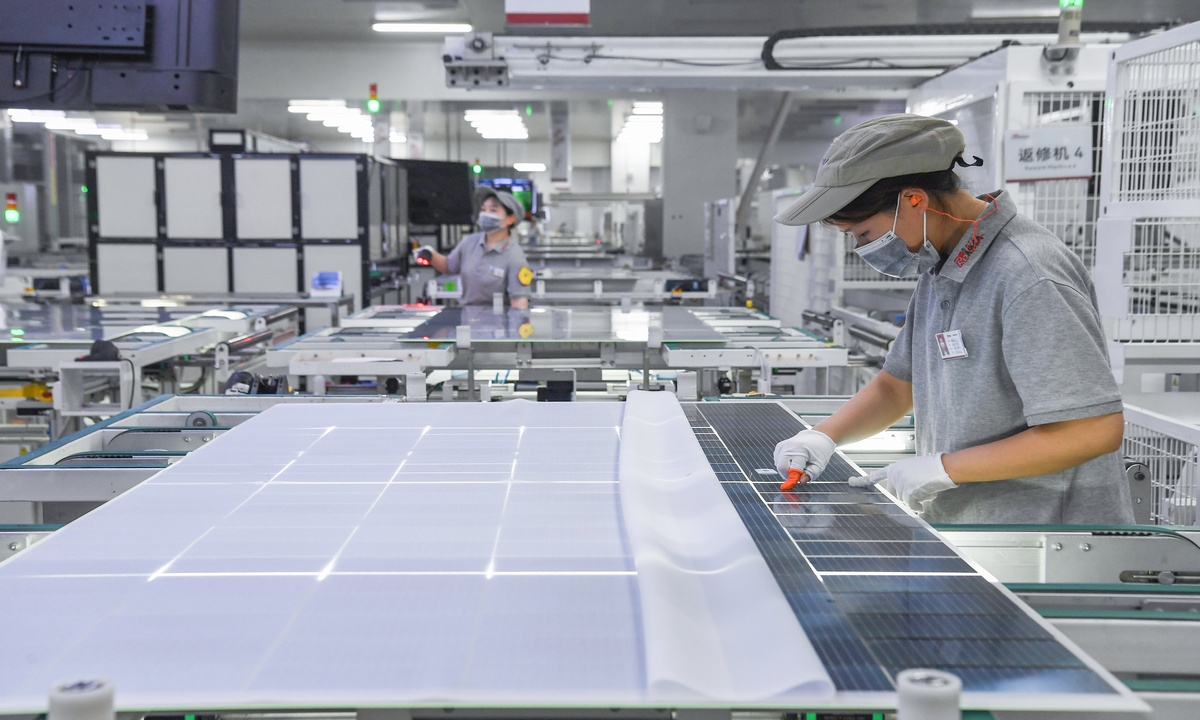
China saw robust exports in electric vehicles (EV), lithium batteries and photovoltaic products, known as the "new three," in the first half of this year. More notably, robotics, artificial intelligence (AI) and innovative drugs, which represent the future direction of industrial development, are also emerging as new calling cards for China's foreign trade.
However, the impressive performance provoked unease among some Western media outlets and politicians. Some have deliberately portrayed China's rapid industrial development and strong competitiveness as a result of government subsidies, pushing the false claim that subsidies have created overcapacity and those low-priced Chinese products are flooding global markets. Such fallacies, which simply equate industrial subsidies with overcapacity, are not only logically flawed but also factually groundless.
In practice, many countries adopt industrial policies tailored to their national conditions and development needs, such as providing research and development (R&D) subsidies for emerging industries and risk related subsidies for agriculture.
Well-designed industrial subsidies can help address market failures, promote technological innovation and environmental protection, reduce poverty and support balanced development, rather than cause so called "overcapacity."
Multiple reports by the United Nations Conference on Trade and Development have noted that the number of industrial policies worldwide has grown rapidly over the past five years, with R&D subsidies, tax incentives and low interest loans for emerging industries becoming common international practices.
Forcibly linking industrial subsidies to "overcapacity" is, in essence, a political manipulation based on double standards. The US, for example, plans to provide $750 billion in various subsidies from 2022 to 2031 under its Inflation Reduction Act. Subsidized EVs are subject to requirements such as production and sales in the US or North America, effectively excluding other WTO members. US industrial subsidies for AI are even greater than those of all other countries combined.
Similarly, according to incomplete statistics, the European Commission is expected to provide more than 1.44 trillion euros ($210 billion) in various subsidies between 2021 and 2030. The EU's Industrial Accelerator Act links local content directly to financial support through "Made in EU" requirements, creating serious investment barriers and institutional discrimination.
Have these massive subsidies been labeled as causing "overcapacity"? The answer is no. While claiming that China's industrial subsidies lead to so-called overcapacity, these countries are themselves providing massive subsidies to their own industries. Such double standards amount to selective accusations targeting China, aimed at politicizing trade and economic issues and weaponizing industrial policy.
At a deeper level, accusations that "China's industrial subsidies cause overcapacity" are merely a pretext, reflecting growing anxiety and fear over the rising competitiveness of Chinese industries.
Looking back at the repeated hype in Western media, the criticism has consistently targeted China's most globally competitive industries, including new-energy vehicles, photovoltaics and power batteries. This exposes the real intention of shifting the blame for their own lagging industrial development onto China while stepping up restrictions against Chinese industries.
China's breakthroughs in these industries have been driven by advances in homegrown technologies, complete industrial and supply chains, and robust market competition, rather than by policy subsidies as some have claimed.
In recent years, China has taken multiple steps to regulate and improve its subsidy policies, from reviewing and correcting inappropriate local subsidies to exploring a unified negative list mechanism for local fiscal subsidies. China applies subsidies equally to all market entities, including foreign invested enterprises, strictly follows WTO rules, and continues to improve the compliance, effectiveness and transparency of its subsidy policies.
Rather than fabricating and hyping baseless claims about subsidies and obsessing over building trade barriers, certain Western media outlets and politicians should focus on addressing their own weaknesses and increasing investment in research and development. They should embrace healthy market competition with an inclusive mindset, promote mutual benefit through greater openness, and win markets and drive progress through genuine innovation.
This was compiled and translated by the Global Times English edition based on an article published in the "Chisu Jinsheng" economic commentary column of the People's Daily on August 10, 2026.
。
Current article:http://6ds96i.menxiaomoriniangbai.bond/3di/t00w2sj.html
Published on:11:19:52